Understand how the Discover it® Cash Back works and how to apply the card!
5% rotating categories with activation, the quarterly spending cap, Cashback Match in year one, key fees like no annual fee and no foreign transaction fee, and step-by-step application.
Overview of the Discover it® Cash Back
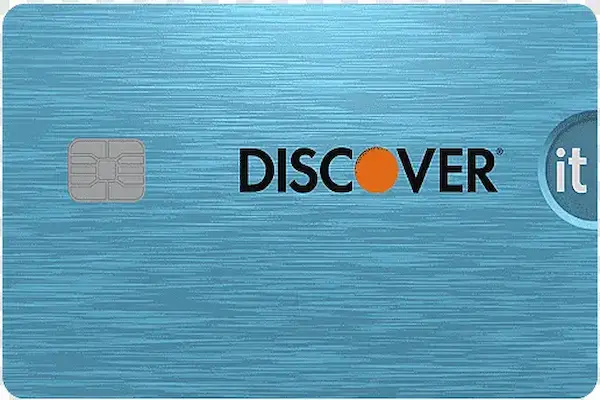
The Discover it® Cash Back is a rotating-category cash back credit card that rewards people who like to “play the calendar” a few times a year.
Instead of one permanent bonus category, Discover publishes categories that change each quarter.
When you activate the quarter, you can earn 5% cash back in those categories up to a quarterly limit, and 1% on everything else.
The signature twist is Cashback Match, which matches all the cash back you earn at the end of your first year as a new cardmember, with no stated maximum match.
It is also typically positioned as a no-annual-fee card, which keeps the long-term math simple.
Who this card is designed for
This card is usually best for people who do not mind a small quarterly habit.
It fits shoppers whose spending naturally lines up with seasonal categories like groceries, gas, dining, travel, Amazon, or home improvement.
It can be a strong “second card” alongside a flat-rate card, because you can use Discover for the 5% categories and use your other card for everything else.
It also appeals to beginners, because the rewards are straightforward once you understand activation and the quarterly cap.
Charge card vs credit card
The Discover it® Cash Back is a credit card.
That means you have a credit limit, a statement balance, and a due date.
You can pay in full to avoid interest, or carry a balance and pay interest under the card’s APR terms.
The “value equation” in one paragraph
The value equation is about effort versus upside.
If you consistently activate the quarterly categories and route the right purchases to the card, 5% cash back can be excellent for a no-annual-fee product.
If you forget to activate or your spending does not match the categories, you may end up earning mostly 1%, which is not very competitive.
Cashback Match can make the first year unusually rewarding, but the card still needs to fit your habits after year one.
Quick facts (scannable summary)
Key fees (annual fee, balance transfer fee, foreign transaction fee)
Annual fee: $0.
Foreign transaction fee: Discover states it charges no foreign transaction fee.
Intro APR offers: Discover advertises intro APR offers on some versions of the card, and the length and terms can vary by offer and eligibility.
Balance transfer fees: balance transfers usually have a fee, and Discover commonly advertises an introductory balance transfer fee for a limited time, followed by a higher fee afterward, depending on the offer terms.
Late payment and returned payment fees can apply depending on your cardmember agreement and account behavior.
Always confirm your exact pricing and terms in the offer details you are applying under.
Reward structure (earning, caps, redemption basics)
You can earn 5% cash back on everyday purchases in quarterly rotating categories, after activation, up to the quarterly maximum.
The quarterly maximum is commonly presented as up to $1,500 in purchases per quarter in the activated categories.
After you hit the quarterly maximum in the 5% categories, those purchases typically earn 1% for the rest of that quarter.
All other eligible purchases generally earn 1% cash back automatically.
Discover states your cash back does not expire for the life of the account.
Discover also states that $1 cash back equals $1 to redeem, which is a simple way to think about value.
Core benefits (top 5 bullets)
- 5% cash back in rotating categories each quarter after activation, up to the quarterly maximum.
- 1% cash back on all other eligible purchases automatically.
- Cashback Match for new cardmembers, matching the cash back earned at the end of the first year, with no stated cap.
- No annual fee.
- No foreign transaction fee, according to Discover.
Eligibility and approval: what typically matters
Credit profile expectations (general, no promises)
Issuers typically evaluate your credit profile as a full picture, not one number.
They usually look at payment history, including whether you pay on time.
They often consider utilization, which is how much of your available credit you are using.
They consider the age of your credit history and the mix of accounts you manage.
They also look at recent inquiries and new accounts, because a lot of recent credit activity can increase risk signals.
Income and monthly obligations matter because lenders want to see that the credit line fits your budget.
None of these factors guarantees approval, because underwriting depends on the issuer’s internal criteria at the time you apply.
Income and spend patterns that may help (general guidance)
Applications typically ask for income and housing costs.
Stable income and consistent on-time payments tend to help your profile over time.
Lower revolving utilization can help, especially if you reduce balances before applying.
If you are applying for a balance transfer strategy, it helps to have a realistic monthly payoff plan before you move debt.
Application flow
This is not positioned as an invite-only product.
Most people apply through a standard consumer credit card application process.
Some applicants receive a fast decision, while others may be asked for verification steps.
Fees and costs you must understand first
Annual fee breakdown and what’s included
The annual fee is $0, which lowers the “pressure” to extract value.
You do not need statement credits or premium perks to justify a yearly cost.
Instead, your value comes from using the rotating 5% categories effectively and redeeming consistently.
Balance transfers and intro APR offers
Discover often promotes an intro APR offer on purchases and balance transfers for eligible applicants.
The exact duration, the balance transfer window, and the balance transfer fee structure can vary by offer.
A practical way to evaluate any 0% intro APR is to treat it as a deadline.
If you cannot pay off the balance before the intro period ends, the remaining balance may begin accruing interest at the standard APR.
A balance transfer fee can be the “hidden” cost that changes the decision.
You can estimate the fee by multiplying the amount you plan to transfer by the fee percentage, then deciding whether the interest savings elsewhere outweigh that upfront cost.
Foreign transaction fees and travel reality
Discover states it has no foreign transaction fee, which is valuable if you purchase from international merchants or travel abroad.
The separate question is acceptance, because Discover acceptance can vary by country and merchant.
If international travel is a big part of your life, many people keep a backup card on another network for broader acceptance.
Interest charges and how they can wipe out rewards
Rotating-category rewards can look amazing, but interest can erase the benefit quickly if you carry balances.
If you want to optimize cash back, paying in full is usually the cleanest path.
If you need financing, the intro APR offer and payoff plan often matter more than the rewards rate.
Rewards: earning and redemption (the real math)
How you earn
The core routine is quarterly.
Discover publishes the upcoming bonus categories for a quarter.
You activate the quarter’s offer in your account.
You earn 5% cash back in those categories up to the quarterly maximum.
You earn 1% on all other eligible purchases.
Common examples of rotating categories across different years include grocery stores, gas stations, restaurants, digital wallets, Amazon, wholesale clubs, home improvement, and select streaming services.
The best approach is to treat the categories as “sometimes perfect, sometimes irrelevant,” and plan accordingly.
Why activation is the make-or-break detail
Activation is the difference between 5% and 1% in the bonus categories.
If you forget to activate, you can still use the card, but you may miss the entire quarter of elevated rewards.
A simple way to prevent that is to set recurring reminders for the first week of January, April, July, and October.
Another approach is to activate as soon as a new quarter becomes available, then ignore it until the next quarter.
The quarterly cap and the real ceiling on 5%
The 5% rate is limited by a quarterly maximum, commonly shown as up to $1,500 in purchases per quarter in the activated categories.
That cap matters because it sets your maximum 5% earnings for the quarter.
If the cap is $1,500, then 5% of $1,500 equals $75 in cash back at the 5% rate for that quarter, before considering Cashback Match in year one.
After you reach the cap, additional purchases in the bonus categories typically earn 1% until the next quarter starts.
The practical strategy is to reserve your Discover spending for the quarter’s categories until you approach the cap, then switch to a different card for overflow.
Cashback Match and why the first year can feel special
Cashback Match means Discover matches the cash back you earn in your first year as a new cardmember.
If you earned $300 in cash back during the first year, Discover would match $300, for $600 total, based on how Discover describes the program.
This effectively doubles your rewards rate during the first year, assuming you were going to spend the same way anyway.
It is especially powerful on 5% quarters, because 5% becomes “effectively 10%” during the first year when the match is applied at year end.
The important mental model is that the match is paid later, so you should not plan on it to cover immediate bills.
Redemption options and keeping it simple
Discover positions its cash back as straightforward value where $1 earned equals $1 to redeem.
In practical terms, cash back programs typically allow redemptions like statement credits, bank deposits, gift cards, and sometimes purchases through partner channels.
The best redemption method is usually the one you will actually use consistently.
If you want minimal effort, redeeming as a statement credit on a schedule can keep things clean.
If you like to see rewards “hit your bank,” deposits can feel more tangible.
Example: a realistic year with and without optimization
Assume you spend $12,000 per year across a variety of everyday purchases.
Assume $6,000 of that spend lands in the rotating 5% categories across the year, and you activate every quarter, but you never exceed the quarterly cap.
At 5%, $6,000 would generate about $300 in cash back.
Assume the remaining $6,000 earns 1%, generating about $60.
That would be about $360 in cash back for the year in this simplified example.
If you are in your first year with Cashback Match, that $360 could be matched for an additional $360 at the end of the year, for about $720 total, based on the program description.
Now assume you do not activate and everything earns 1%.
At 1% on $12,000, you would earn about $120.
This is why activation and category alignment are the entire game with this card.
Benefits deep dive
Rotating categories and “seasonal advantage”
The biggest benefit is the ability to earn 5% in categories that align with real-world seasons.
Grocery categories can be strong when your household spending is high.
Gas categories can be strong during road trip seasons or commutes.
Amazon or online shopping categories can be powerful around holiday buying.
Home improvement categories can be useful during spring and summer projects.
Digital wallet categories can be surprisingly easy if you use tap-to-pay in many places.
The card rewards you most when you can naturally shift spending into the quarter’s focus without buying things you do not need.
No foreign transaction fee
Discover states there is no foreign transaction fee.
That can protect you from the common 1% to 3% surcharge many issuers add to foreign purchases.
It does not automatically guarantee acceptance abroad, so it is best treated as “no extra fee when it works,” not “perfect travel card.”
Security and fraud features
Most major issuers offer fraud monitoring and account alerts.
The practical value comes from turning on notifications for large purchases, international transactions, and due dates.
This is especially helpful for a rotating-category card, because you may use it heavily in some quarters and lightly in others.
Simplicity of value
Some rewards programs feel like a math problem.
Discover’s cash back framing is simpler, because it is typically described in dollar terms rather than points valuation.
That simplicity can help you actually redeem and enjoy the rewards instead of letting them sit unused.
Pros and cons
Pros
- Strong upside in 5% rotating categories when you activate and stay under the quarterly maximum.
- Cashback Match can make the first year unusually rewarding for new cardmembers.
- No annual fee keeps the long-term cost low.
- No foreign transaction fee, according to Discover.
- Cash back value is straightforward, and Discover states rewards do not expire for the life of the account.
Cons
- You must activate categories quarterly to earn the best rewards.
- The 5% rewards are capped each quarter, so heavy spenders may hit the ceiling quickly.
- If the categories do not match your life, you may earn mostly 1%, which is weak compared to flat-rate cards.
- Acceptance can be less universal than some other payment networks, especially outside the U.S., depending on where you shop and travel.
Who this card is best for (and who should skip)
Best-fit profiles (3 profiles)
Profile 1: The planner who enjoys quick quarterly check-ins and wants to maximize 5% categories.
Profile 2: The two-card user who already has a flat-rate 2% card and wants Discover as a quarterly booster.
Profile 3: The new cardmember who can benefit from Cashback Match in year one without changing spending habits.
Not a fit if… (3 profiles)
Not a fit 1: You want a true set-it-and-forget-it card with no activations and no caps to track.
Not a fit 2: Your spending does not align with the types of categories Discover rotates through, so you would mostly earn 1%.
Not a fit 3: You travel internationally often and need the widest possible acceptance with one primary card.
Head-to-head comparisons (SEO powerhouse)
Discover it® Cash Back vs Chase Freedom Flex
Both cards are known for rotating 5% category calendars with quarterly activation.
The difference often comes down to which categories you prefer, how you redeem rewards, and how the issuer’s ecosystem fits your other cards.
Discover’s standout differentiator is Cashback Match in the first year for new cardmembers.
If you value first-year upside and simple cash back framing, Discover may feel easier.
If you prefer pairing with a points ecosystem you already use, another rotating-category card may fit better.
Discover it® Cash Back vs Citi Custom Cash
Citi Custom Cash is often framed around automatically rewarding your top eligible spending category each billing cycle up to a cap, rather than a published quarterly calendar.
Discover requires quarterly activation and category planning, but can be very strong when the quarter matches your spending.
If you want automation, an “auto top category” model may feel smoother.
If you like knowing the categories in advance and planning around them, Discover’s calendar approach can feel more controllable.
What you give up / gain at each price tier
At the no-annual-fee tier, the core decision is usually rewards rate versus simplicity.
Discover it® Cash Back leans toward higher potential rewards with a bit of management.
Flat-rate 2% cards lean toward simplicity with steady earnings.
Annual-fee cards often add travel credits and premium protections, but they only make sense if you will truly use those extras.
For many people, a no-annual-fee strategy with one flat-rate card plus one rotating-category card is a balanced setup.
How to apply (step-by-step)
Application steps
Step 1: Review the current offer details for the Discover it® Cash Back, including Cashback Match terms and any intro APR offer terms.
Step 2: Decide whether you want the card primarily for rewards, for an intro APR plan, or for both.
Step 3: Estimate whether you can realistically use the quarterly categories without forcing purchases.
Step 4: Gather your personal details, including address history, income, and housing costs.
Step 5: Submit the application with accurate information.
Step 6: Complete any requested verification steps if the issuer asks for them.
Step 7: After approval, set up online access and turn on alerts for payments and category activations.
Step 8: Activate the current quarter’s 5% categories as soon as your account is ready.
What to prepare (income, docs, planning)
Know your annual income and your monthly housing payment.
If you plan to use a balance transfer offer, know the amount you want to transfer and estimate the balance transfer fee impact.
If you want to maximize rewards, plan a simple category routine and set reminders for quarterly activation.
If you travel internationally, consider whether you want a backup card for acceptance even though Discover states it has no foreign transaction fee.
What happens after approval (setup and habits)
You activate the card and set up your payment method.
You decide whether to use autopay to reduce the risk of missing due dates.
You activate the quarter’s categories and track your spending against the quarterly maximum.
You pick a redemption routine so your cash back does not pile up unnoticed.
Alternatives if you want similar value for less effort
Best alternative if you want one simple rule
If you want simplicity, a flat-rate 2% cash back card can be easier to manage.
This is especially true if you do not want to track quarterly activations or caps.
A flat-rate card also performs more predictably if your spending does not match rotating categories.
Best alternative if you want automatic category rewards
If you like the idea of 5% but want less planning, consider cards that automatically apply a high rate to your top eligible category each billing cycle up to a cap.
You may earn a similar upside without needing to remember activation dates.
FAQs
Is Discover it® Cash Back worth it?
It can be worth considering if you will consistently activate categories and your spending aligns with the quarterly calendar.
It can be especially compelling in the first year for new cardmembers because Cashback Match can double the cash back earned, based on how Discover describes the program.
Do I have to activate the 5% categories?
Yes, activation is typically required to earn 5% in the bonus categories for that quarter.
Without activation, you may earn the base rate instead.
What is the quarterly maximum for 5%?
Discover commonly presents the quarterly maximum as up to $1,500 in purchases per quarter in the activated categories.
After that limit, purchases in those categories typically earn 1% for the rest of the quarter.
Do rewards expire?
Discover states the cash back does not expire for the life of the account.
Is there a foreign transaction fee?
Discover states it charges no foreign transaction fee.
Can I use this card internationally?
Discover states you can use the card internationally, but acceptance can vary by location and merchant.
Many travelers keep a backup card on another network for broader acceptance.
What kinds of purchases do not earn cash back?
Most rewards programs exclude certain transactions such as cash advances, balance transfers, fees, interest, and some cash-equivalent transactions.
The exact exclusions are defined in the rewards terms for your account.
When do I get Cashback Match?
Cashback Match is described as being applied at the end of your first year as a new cardmember.
It is not typically delivered monthly, so plan as if your regular cash back is the only cash back you have during the year.
Disclosures
Rates and fees disclaimer
Rates, fees, rewards categories, quarterly limits, and promotional offers can change at any time.
Your APR, credit limit, and approval outcome depend on creditworthiness and the issuer’s underwriting at the time you apply.
Always review the official pricing, rewards terms, and cardmember agreement for the exact offer you choose.
Editorial and affiliation disclosure
This article is for informational purposes only.
We are not Discover.
We do not represent Discover.
We are not affiliated with any institution or card network mentioned.
All trademarks belong to their respective owners.