Affordable Connectivity alternatives (Lifeline)
Are you searching for Affordable Connectivity alternatives with discount in 2026?
You probably remember the ACP benefit and you want something similar that actually lowers your bill.
Here’s the straight answer.
The Affordable Connectivity Program (ACP) is no longer available, so the most realistic replacement path is Lifeline plus low-income plans offered directly by internet providers.
This guide shows you exactly what to do, what to avoid, and how to get to a lower monthly price without getting stuck in confusing, outdated offers.
Independence notice: This content is informational only.
We are not affiliated with, sponsored by, or in control of any government agency, the FCC, USAC, Lifeline, internet providers, or any third party mentioned.
Rules, eligibility, discounts, and availability can change, so always verify details with official program channels and your local providers.
Affordable Connectivity: what changed after ACP ended
Affordable Connectivity became confusing because ACP funding ended, and the program stopped supporting new enrollments.
That’s why you still see websites and ads using “Affordable Connectivity” language that no longer matches what’s active today.
When you search for Affordable Connectivity help now, you’ll usually land in one of three situations.
- You find an outdated page that still talks about ACP as if it’s open.
- You find a provider promotion that uses “government internet” wording loosely.
- You find the current, legitimate option that remains widely available: Lifeline.
The big mindset shift is that you’re not replacing ACP one-for-one.
You’re building the best “post-ACP” setup using programs and plans that still exist.
Affordable Connectivity alternatives: the two paths that work for most people
For most households, the strongest Affordable Connectivity alternatives are a federal discount through Lifeline and a separate low-income plan from your provider.
These two paths can work independently, and sometimes they can work together depending on where you live and what your provider allows.
So instead of chasing one magic replacement, you’ll use a simple strategy.
You secure the stable discount first.
Then you shop the plan that makes your monthly total as low as possible.
- Lifeline: a long-running federal program that helps eligible households reduce the cost of phone or internet service.
- Provider low-income plans: discounted plans some ISPs offer to eligible customers, often tied to income or participation in assistance programs.
If you do this in the right order, you stop feeling like you’re “begging for a discount” and start feeling like you’re choosing from real options.
Affordable Connectivity replacement: what Lifeline actually offers
Lifeline is the closest thing to a stable federal Affordable Connectivity replacement, because it still provides an ongoing monthly benefit for eligible households.
The standard Lifeline support amount is up to $9.25 per month in most areas.
If you live on qualifying Tribal lands, the support can be up to $34.25 per month.
What matters most is how the benefit gets applied.
You first prove eligibility through the official eligibility process.
Then you enroll with a participating provider so the discount actually appears on your bill.
If you skip the provider enrollment step, you can be approved and still not see any savings.
Affordable Connectivity eligibility: how you may qualify for Lifeline
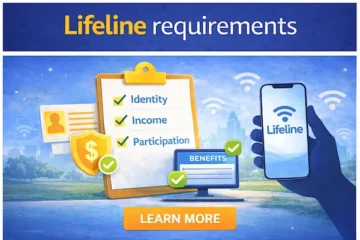
You can usually qualify for Lifeline in one of two ways: by income or by participation in qualifying assistance programs.
This is helpful, because it gives you more than one route to approval.
Qualifying by income
You may qualify if your household income is at or below 135% of the Federal Poverty Guidelines.
The exact income threshold depends on household size and is updated periodically.
So the safest move is to confirm the current income chart on official Lifeline resources when you apply.
Qualifying by program participation
You may qualify if you or someone in your household participates in certain assistance programs.
Common examples include:
- SNAP (Supplemental Nutrition Assistance Program).
- Medicaid.
- SSI (Supplemental Security Income).
- Federal Public Housing Assistance.
- Veterans Pension and Survivors Benefit, when applicable.
- Qualifying Tribal programs for eligible residents, when applicable.
If you’re unsure which category you fit, you can still prepare your documents and choose the clearest path.
Most delays come from documentation issues, not from “almost qualifying.”
Affordable Connectivity documents: what to gather before you apply
To apply smoothly, you want to prepare documents that prove identity and eligibility clearly, with matching details.
This step matters because the most common problem is a mismatch between your form and your proof.
Here’s what you typically need.
- Proof of identity, such as a government-issued ID or another accepted document.
- Proof of eligibility, such as an award letter, benefits statement, or income documentation, depending on your route.
- SSN information, often the last four digits, depending on what the application requests.
Before you submit, check these small details that cause big delays.
- Your name is spelled the same way on every document.
- Address includes apartment number if you have one.
- Uploads are readable, not blurry, and not cropped.
- Proof shows dates and program names clearly, not just your name.
If you fix these up front, you massively increase your odds of a fast approval.
How to apply: Affordable Connectivity alternative through Lifeline
You can apply for Lifeline in three main ways: online, by mail, or with help from a participating provider.
The goal is the same in every case.
You submit your information for eligibility verification, then connect the approved benefit to a provider plan.
| Method | How it works | Best fit for you if… |
|---|---|---|
| Online | You complete the application digitally and upload your documents. | You want the fastest route and can upload clear files. |
| By mail | You print the application and mail copies of your documentation to the Lifeline Support Center. | You prefer paper or don’t have stable internet access. |
| Through a provider | A participating company helps you submit information and choose a plan. | You want a single place to handle approval and setup. |
One important exception is that some states may use a different process.
If you live in California, Oregon, or Texas, you may have state-specific steps.
In that case, you should follow your state’s Lifeline instructions or ask a participating provider which application path applies to your address.
Affordable Connectivity next step: how to get the discount on your bill
After you’re approved, you still need to enroll your benefit with a participating provider, because approval alone doesn’t automatically lower your bill.
This is the moment where many people get stuck, so I want you to picture it clearly.
Eligibility is step one.
Enrollment on a plan is step two.
To complete step two, call or visit a participating provider and say you have Lifeline eligibility.
Then ask which plans at your address can accept the Lifeline benefit.
If your current provider doesn’t participate, you may need to switch providers to use the benefit for internet service.
That’s not fun, but it’s often where the real savings happen.
Affordable Connectivity alternatives: low-income internet plans to ask about
Many major providers have their own discounted plans for eligible households, and these plans can be a strong Affordable Connectivity alternative even without ACP.
The most important thing to know is that pricing, speeds, and eligibility rules can vary by location.
So instead of trusting a random blog screenshot, you’ll use this list as your “ask list” when you contact providers.
- Xfinity Internet Essentials, which is widely known as a low-cost option in many areas.
- Spectrum Internet Assist, which is offered in certain service regions with eligibility requirements.
- Access from AT&T, which may be available at eligible addresses.
- Verizon Forward, which can provide discounts on eligible Verizon services in some areas.
- Cox ConnectAssist, which may be available depending on region and eligibility.
Here’s the best script to use, because it forces a clear answer.
“I’m looking for your low-income internet plan options at my address.
What do I qualify for, what is the final monthly price with all fees, and can Lifeline be applied?”
That last part matters, because some providers will apply Lifeline to certain services, while others may not.
Even when stacking isn’t possible, a provider’s own plan can still lower your cost dramatically.
Affordable Connectivity for students: practical options when home internet is hard
If your household is focused on K–12 students, you may have additional options through schools, districts, and education-focused connectivity programs.
Many districts have device and hotspot lending programs, especially when students have documented need.
Some national initiatives have also offered student-focused connectivity support, such as hotspot access for eligible families.
Because the terms and availability can change, your safest move is to start local.
Call your school office or district help desk and ask if they provide hotspots, subsidized service, or partner referrals for home internet.
If you can combine a low-cost home plan with a backup hotspot, you’ll feel much less vulnerable during the month.
Affordable Connectivity alternatives: nonprofits and community programs that help
When your biggest barrier is equipment, nonprofits and community resources can help you get online without spending a fortune upfront.
Two well-known nonprofits in this space are Human-I-T and PCs for People.
They are known for offering refurbished devices and, in some locations, guidance or options related to affordable connectivity.
Availability depends on where you live, so you’ll want to confirm current offerings directly with the organization.
Don’t overlook your local library either.
Many libraries offer computer access, free Wi-Fi, and sometimes hotspot lending programs.
Even if your library doesn’t lend hotspots, staff often know other local connectivity resources.
Affordable Connectivity warning signs: how to avoid scams and outdated offers
When people search for Affordable Connectivity, scammers and outdated marketers take advantage of the confusion.
So you need a simple filter to protect your time and your personal information.
Watch out for these red flags.
- Someone asks you to pay a fee to “guarantee” approval.
- A page claims ACP is open for new signups without clarifying the program ended.
- A company asks for sensitive data before confirming you’re on an official application or provider enrollment path.
- An offer sounds too good to be true and can’t be verified through official channels.
The safest approach is to use official program application paths and then enroll directly with a participating provider.
If you stay in that lane, you avoid most of the internet noise.
Affordable Connectivity step-by-step 2026
If you want the fastest path to a lower bill, follow this order and you’ll avoid the most common mistakes.
- Decide whether you need home internet, mobile data, or both.
- Check whether you qualify for Lifeline by income or by program participation.
- Gather proof of identity and proof of eligibility, making sure your details match.
- Apply using the method that fits your situation, online, mail, or through a provider.
- After approval, contact a participating provider and enroll the benefit on a plan at your address.
- Ask providers about their low-income plans and compare the final monthly cost, not just the advertised price.
- If students depend on your connection, ask your school district or library about hotspots and backup options.
If you do these steps in sequence, you stop chasing “Affordable Connectivity rumors” and start building a real solution that lowers your monthly cost.
And once you see that lower bill hit your account, you’ll feel the relief immediately.