Airtalk Wireless Lifeline – Phones, plans, eligibility & how to apply
Learn Airtalk Wireless Lifeline eligibility, phone options, BYOP, documents needed, and step-by-step enrollment for faster activation.
Airtalk Wireless Lifeline: what it is and how it works
Airtalk Wireless Lifeline is Airtalk’s Lifeline-supported phone service for people who qualify.
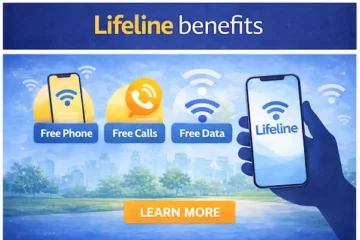
Lifeline is a federal program that provides a monthly discount to make phone and internet service more affordable for eligible low-income households.
The Lifeline benefit is typically up to $9.25 per month in most areas.
If you live on qualifying Tribal lands, the enhanced benefit can be up to $34.25 per month.
Lifeline is limited to one benefit per household, which means you can’t stack multiple Lifeline lines under the same household rules.
Once you’re eligible, you still have to enroll with a participating provider, because eligibility alone doesn’t automatically activate service.

Independence notice:
This content is informational only.
We are not affiliated with, sponsored by, or in control of Airtalk Wireless, USAC, the FCC, Lifeline, or any third party mentioned.
Program rules, pricing, phone availability, and features can change, so always confirm details through official Lifeline channels and Airtalk’s own pages.
Airtalk Wireless Lifeline plans: what you should expect in 2026
With Airtalk Wireless Lifeline, you should expect a plan built around talk, text, and monthly data, with details that can vary by state and offer.
Airtalk describes its plans as including unlimited talk and text, plus mobile data, with SIM options that can include a physical SIM kit or eSIM.
Airtalk also promotes free international calling to over 200 countries and territories as included with its plans.
At the same time, Airtalk’s plan pages show that some “unlimited” plans can slow down after you exceed certain data parameters, which is a common industry practice called deprioritization or reduced speeds.
So your best mindset is simple.
You’re looking for a plan that fits your real-life usage, not just the biggest number on a banner.
What Airtalk says is included in its plans
When you’re comparing Airtalk offers, these are the plan features Airtalk commonly lists across its materials.
- Unlimited talk and unlimited text.
- Free international calling to 200+ countries and territories.
- Free SIM kit or eSIM, depending on what your device supports.
- Wi-Fi calling and access to emergency calling features, with the normal industry disclaimer that access may not work in all situations.
- Voicemail, caller ID, and 3-way calling.
If you want the most accurate plan details for your location, you should treat your ZIP code as the deciding factor, because Airtalk repeatedly indicates that offers can vary by region.
Airtalk Wireless Lifeline phones: what “free phone” really means
Airtalk is known for advertising device options, including Apple devices, but availability depends on region and stock.
On Airtalk’s own free-phone listings, you can see examples like Apple iPhone 7 shown among the selectable devices, along with many Android models.
Those pages also state that the price “varies by region,” and you’ll often see some models marked out of stock.
That’s your clue to avoid assumptions.
You might see a phone for $0 in one ZIP code and not see it in another.
See an iPhone model appear today and disappear next week due to inventory.
Set your expectations the smart way
If you go in with the right expectations, you’ll feel in control instead of feeling tricked by marketing.
- Assume you will choose from what’s available for your ZIP code at signup.
- Expect many free devices to be basic or older models, especially when demand is high.
- Treat any premium-looking upgrade as an optional add-on, not a guarantee.
- Plan for the possibility that the best deal is bringing your own phone and using a free SIM or eSIM.
This approach helps you avoid the classic disappointment of planning your whole setup around a specific phone model.
Airtalk Wireless Lifeline eligibility: how you qualify
You typically qualify for Airtalk Wireless Lifeline the same way you qualify for Lifeline anywhere: by income or by program participation.
Airtalk’s own guidance points to the standard Lifeline eligibility structure, including income at or below a threshold tied to federal poverty guidelines and eligibility through qualifying assistance programs.
Qualifying by program participation
If you receive benefits through certain programs, you may qualify for Lifeline.
Common examples often include programs like Medicaid, SNAP, SSI, and Federal Public Housing Assistance, among others.
The key is that you’ll need proof that clearly shows your name and current participation.
Qualifying by income
If you qualify by income, your household income generally needs to be at or below the Lifeline income threshold, which is tied to federal poverty guidelines.
The exact income limit depends on household size and can be updated, so you should confirm the current chart during the official application flow.
This is where many people lose time, because they rely on an old screenshot from social media.
So do yourself a favor and trust the official eligibility prompts instead of random posts.
How to apply for Airtalk Wireless Lifeline: the safest step-by-step
The safest way to apply for Airtalk Wireless Lifeline is to follow the Lifeline eligibility process and complete Airtalk enrollment using your ZIP code.
Airtalk’s own instructions and resources emphasize starting with your location, selecting your plan path, and submitting documents if requested.
Here’s the clean step-by-step that reduces delays.
- Start with your ZIP code.
- Enter your ZIP code on Airtalk’s enrollment flow so you see offers available in your region.
- Choose your setup type.
- Select either a free phone option if available, or choose BYOD if you’re bringing your own device.
- Complete the eligibility verification steps.
- Follow the Lifeline eligibility prompts and provide the information requested.
- Upload documents only if requested.
- If the system asks for proof, upload clear, readable images that show the full document.
- Submit and watch for approval updates.
- Some applications are quick, while others may require manual review if anything doesn’t match.
- Activate with your SIM or eSIM.
- Once you receive your SIM kit or eSIM details, follow Airtalk’s activation instructions to turn on service.
If you do it in this order, you avoid the biggest mistake people make.
They pick a phone first, get emotionally attached, and then find out it’s not available in their region.
You’re going to do the opposite.
You’ll let your ZIP code and eligibility determine what’s real.
National Verifier and Airtalk Wireless: what you should know
Lifeline eligibility is handled through official verification, which is why you’ll hear the term “National Verifier.”
USAC’s Lifeline Support resources explain that you apply for Lifeline, then sign up with a participating provider, and you also have to keep your benefit current through annual recertification.
That’s important because Lifeline is not a “set it and forget it” discount.
You’ll need to respond to recertification requests when they happen, or you can lose the benefit.
This is also why you should keep your contact info updated.
If your email or mailing address changes, update it, because missed notices can create unnecessary interruptions.
Airtalk Wireless BYOP: when bringing your own phone is the best move
BYOP can be your best Airtalk Wireless Lifeline option when you already have a working phone and you want the fastest setup.
Airtalk’s materials describe providing a free SIM kit and also offering a free eSIM for customers who want it, depending on device compatibility.
This matters because it can reduce waiting time.
If your phone supports eSIM and Airtalk supports eSIM for your plan, you may be able to activate without waiting for shipping.
Even when you use a physical SIM, BYOP is still powerful because you avoid device inventory issues.
You’re not hoping a phone is in stock, simply activating service on a phone you already trust.
BYOP checklist before you commit
Before you choose BYOP, run through this checklist so you don’t waste a week troubleshooting.
- Your phone is unlocked, meaning it’s not tied to a different carrier.
- Is compatible with the network Airtalk uses in your area.
- You can receive either a SIM kit or use eSIM if available for your device.
- You’re ready to follow the activation steps exactly, including any required account verification.
This is how you keep the process smooth and predictable.
Airtalk Wireless Lifeline documents: what you should prepare
If you prepare documents ahead of time, you reduce the chance of delays, especially if your application gets flagged for manual review.
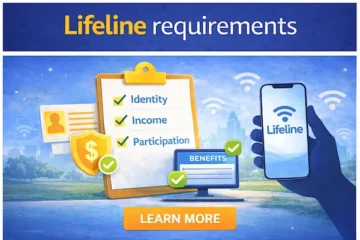
In most Lifeline applications, you’ll need identity proof and eligibility proof, depending on how you qualify.
Here’s a practical, no-stress list to gather.
- Proof of identity, such as a government-issued ID or another accepted document.
- Proof of eligibility, such as a benefits letter or participation proof if you qualify through a program.
- Income documentation if you qualify through income, such as pay stubs or other acceptable proof.
Then do one quick “match check.”
Make sure your name and address are consistent across your application and your documents.
If your documents show “Apt 2B,” don’t type “Unit 2B” in the form unless your official mail uses that format.
This tiny detail can be the difference between instant approval and a frustrating pending status.
Airtalk Wireless Lifeline red flags: how to avoid scams and confusion
Because people search “free government phone” so often, scammers and misleading third-party pages love this topic.
So you want a simple filter that protects your identity and your time.
- If anyone asks you to pay a fee to guarantee Lifeline approval, treat that as a major red flag.
- If a page promises a specific premium phone model as “guaranteed,” be skeptical unless Airtalk shows it for your ZIP code in the official flow.
- If you’re pushed to share sensitive info before you reach official eligibility prompts, pause and verify.
- If an offer uses ACP language like it’s still open, remember ACP was wound down after funding issues, and official notices projected the last fully funded month in 2024.
The safest lane is always the same.
Use official Lifeline guidance for eligibility, then enroll directly with Airtalk using the steps it provides.
Airtalk Wireless Lifeline quick action plan
If you want the fastest path to service, follow this simple plan and you’ll avoid most headaches.
- Check that you qualify for Lifeline by income or program participation.
- Gather readable proof documents so you’re ready if uploads are requested.
- Enter your ZIP code to confirm Airtalk availability and see region-specific offers.
- Choose Free Phone if it’s available and you like the options, or choose BYOP if you want speed and control.
- Submit your application and follow any verification prompts carefully.
- Activate service using your SIM kit or eSIM instructions once approved.
- Set a reminder for annual recertification so you don’t lose the benefit later.
If you follow that order, you’ll feel the difference immediately.
You’ll be making decisions based on what is actually available for you, in your ZIP code, right now.