
How to apply for the card The Barclays View™ Mastercard®
Learn how the Barclays View™ Mastercard® works, including 3X dining, 2X on qualifying bills and grocery stores and 1X on other purchases!
See key fees to verify, typical approval factors, and a step-by-step application checklist.
Overview of the The Barclays View™ Mastercard®
The Barclays View™ Mastercard® is a cash-back style rewards card that earns points in a few everyday categories instead of using rotating quarters.
It is best understood as a “simple category card” that tries to stay relevant for dining, certain home connectivity bills, and grocery store purchases.
The card is generally marketed as having no annual fee, which keeps the long-term ownership math straightforward.
Where it gets interesting is the category mix, because internet, phone, and select streaming services are categories many cards do not explicitly reward.
The rewards are earned as points, and those points can typically be redeemed for cash back style options like statement credits or deposits, depending on your account’s redemption options.
Who this card is designed for
This card usually fits people who spend consistently at restaurants and also pay monthly bills like internet or phone service.
It can also work for households that do a meaningful amount of grocery shopping at merchants that code as grocery stores.
It is often used as a “category specialist” paired with a stronger flat-rate card for everything else.
If you want one single card that earns a strong flat rate everywhere, the “1 point per $1 on everything else” structure can feel limiting.
Charge card vs credit card
The Barclays View™ Mastercard® is a credit card.
That means you have a credit limit, you get a monthly statement, and you choose how much you pay each month.
If you pay your statement balance in full by the due date, you can typically avoid interest on purchases.
If you carry a balance, interest may apply according to the APR terms offered to you.
The “value equation” in one paragraph
The value equation is about whether your life naturally matches the bonus categories.
If you eat out often, pay internet and phone bills monthly, and buy groceries at stores that qualify as grocery stores, you can earn a higher return than a basic 1% card.
If most of your spending is outside those categories, the card behaves more like a 1% card, and a flat-rate 2% card can often outperform it in total yearly value.
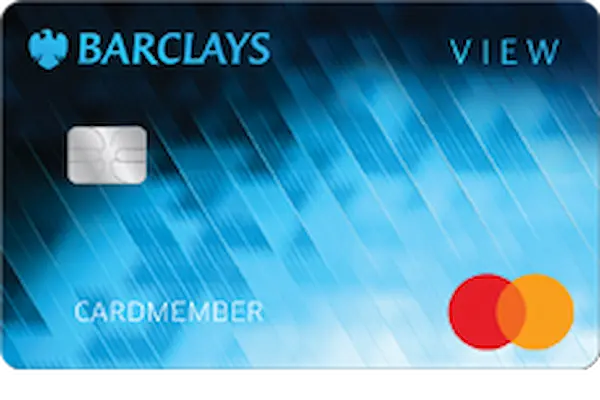
Quick facts (scannable summary)
Key fees (annual fee, authorized users, foreign transaction fee)
Annual fee: commonly marketed as $0.
Foreign transaction fee: you should confirm in your Cardmember Agreement, because this can vary by product and by terms, and many similar cards disclose a fee around 3%.
Balance transfer fees and cash advance fees can apply, and the exact amounts depend on the pricing terms offered to you.
Late payment and returned payment fees can apply depending on your agreement and account behavior.
Reward structure (earning, caps, redemption basics)
You can commonly earn 3 points per $1 on restaurant purchases, including takeout and delivery where the merchant codes as a restaurant.
You can commonly earn 2 points per $1 on internet, select streaming, phone, and TV services.
You can commonly earn 2 points per $1 on grocery store purchases, where the merchant codes as a grocery store.
You can commonly earn 1 point per $1 on all other eligible purchases.
Reward exclusions can apply, and transactions like fees, interest, balance transfers, and cash advances are commonly not eligible for points on many cards.
Redemption options often include cash-back style methods, but your exact options and minimums should be verified in your account’s rewards terms.
Core benefits (top 5 bullets)
- No annual fee structure is commonly advertised for this card.
- Elevated earning on dining purchases for people who spend there regularly.
- Bonus earning on internet, phone, and select streaming services, which can be practical recurring bills.
- Bonus earning on grocery store purchases at eligible grocery merchants.
- Mastercard network acceptance and standard account security tools, with benefits depending on the current benefits guide.
Eligibility and approval: what typically matters
Credit profile expectations (general, no promises)
Approval decisions are based on the issuer’s underwriting and your overall credit profile at the time you apply.
Issuers typically consider payment history, utilization, and the age and mix of your credit accounts.
They also consider recent inquiries and recently opened accounts.
Income and existing obligations matter because lenders want to see the new credit line fits your budget.
Nothing here guarantees approval, because underwriting uses internal models and can change over time.
Income and spend patterns that may help (general guidance)
Applications commonly ask for income and housing costs.
Stable income and on-time payment history generally support a stronger profile over time.
Lower revolving utilization can help, especially if you reduce balances before applying.
If you want rewards value to stay meaningful, paying in full is usually the cleanest approach because interest can exceed the value of points quickly.
Application flow
This is not positioned as an invite-only product.
Most people apply through a standard application flow and may receive an instant decision or a pending review.
Some applicants may be asked for identity verification or additional documentation.
Fees and costs you must understand first
Annual fee breakdown and what’s included
With a $0 annual fee structure, you do not need credits or premium perks to break even.
That makes it easier to keep the card long term if it continues to fit your spending.
Your value comes from the earning categories and how consistently you use them.
Interest and APR reality
Like most credit cards, this product can carry a variable APR based on creditworthiness and the pricing offered at approval.
If you carry balances month to month, interest can outpace rewards quickly.
If you expect to revolve often, the best “rewards strategy” is usually reducing interest first, then optimizing points later.
Balance transfers, cash advances, and why the fine print matters
If you plan to move debt, balance transfers often involve both timing rules and fees.
If you take cash advances, they typically start accruing interest immediately and often have higher APRs and additional fees.
Because these costs are highly term-specific, it is smart to read the pricing disclosure for your exact offer before using these features.
Foreign transaction fee and travel reality
Some versions of similar products disclose a foreign transaction fee, often around 3%, which matters for international travel and foreign online merchants.
Because fees can vary, confirm your specific fee in the pricing terms before relying on the card abroad.
If you travel often, many people pair a domestic category card with a no-foreign-transaction-fee card for international spending.
Rewards: earning and redemption (the real math)
How you earn with the The Barclays View™ Mastercard®
This card’s value is concentrated in three common areas.
Dining is usually the highest-earning category at 3 points per $1.
Connectivity and entertainment bills like internet, phone, TV services, and select streaming services commonly earn 2 points per $1.
Grocery store purchases commonly earn 2 points per $1.
Everything else commonly earns 1 point per $1, which is where you should compare the card to flat-rate options.
The “merchant coding” detail that changes everything
Category rewards usually depend on the merchant category code assigned to the transaction.
That means your purchase can earn differently based on how the merchant is classified, not how you personally think about it.
A restaurant inside a hotel can sometimes code differently than a standalone restaurant.
A streaming service purchase may not qualify if it is billed through a third party that codes differently than the streaming merchant.
Some grocery-like shopping done at superstores or warehouse clubs may not code as “grocery store purchases.”
A practical best practice is to test your top merchants for a month, then look at your rewards activity to confirm what actually earns the bonus rate.
The practical “wallet rule” that makes the card work
A simple rule can help you get value without thinking too hard.
Use the card for restaurants by default.
Use the card for qualifying internet, phone, TV, and select streaming bills if you want those purchases to earn more.
Use the card at grocery stores that you know code as grocery stores.
Use a different flat-rate card for everything else if you want higher than 1 point per $1 on your non-category spending.
What points are “worth” and why you should think in dollars
Points can feel abstract, which is why people forget to redeem them.
The best approach is to treat points like money you get back from spending you already do.
If redemption options include statement credits or deposits, points often behave like cash back in practice.
If you redeem for gift cards or travel, value can vary, and you should compare the redemption value to the cash-back option before choosing.
A simple habit is to redeem on a schedule, like monthly or quarterly, so your points do not sit idle.
Example: a realistic year for a dining-heavy household
Assume you spend $8,000 per year at restaurants.
At 3 points per $1, that would generate 24,000 points in a simplified example.
Assume you spend $2,400 per year on internet and phone bills and select streaming.
At 2 points per $1, that would generate 4,800 points.
Assume you spend $6,000 per year at grocery stores that qualify.
At 2 points per $1, that would generate 12,000 points.
Assume you spend another $10,000 per year on everything else.
At 1 point per $1, that would generate 10,000 points.
In this simplified scenario, you would earn 50,800 points in a year, assuming all purchases are eligible and coded as expected.
This example is illustrative, and actual earnings depend on coding, exclusions, returns, and program terms.
When a flat-rate card can beat this card
If you spend most of your money outside restaurants, grocery stores, and qualifying bills, the card will earn mostly 1 point per $1.
If another card earns a flat 2% cash back everywhere, that can outperform the 1 point per $1 on your overflow spending.
This is why many people treat View as a category tool rather than a universal everyday card.
Benefits deep dive
Dining rewards as a lifestyle anchor
Dining is one of the most common high-spend categories in many budgets.
A 3X dining structure can add up quickly if you eat out regularly.
It is also easy to remember, which matters because complicated rules lead to unused benefits.
If you want the card to “earn its keep,” restaurants are usually the first place to focus.
Internet, phone, and select streaming as “quiet wins”
Many households pay recurring connectivity bills every month.
Cards that reward those bills can be valuable because the spending is steady and predictable.
This category can feel small in one month, but meaningful across a year.
The main watch-out is whether the merchant counts as eligible and whether third-party billing changes the coding.
Grocery store earning and the common pitfall
Grocery earning can be valuable for families, meal planners, and anyone who cooks often.
The common pitfall is assuming all food shopping counts.
Superstores and warehouse clubs often do not code as grocery stores for rewards purposes on many cards.
If your grocery budget is mostly at merchants that do not qualify, the category will not deliver the value you expect.
Special financing, if offered, and how to think about it
Some versions or periods of this product family have been associated with promotional financing offers at select retailers.
Special financing can be useful if it supports a purchase you were already planning and you have a clear payoff plan.
It can also be a trap if it encourages bigger purchases or longer payoff timelines than you can comfortably handle.
The safe approach is to treat financing as a budgeting tool, not a reason to spend more.
Security and account management
Most major issuers provide fraud monitoring and account alerts.
The simplest “benefit” you can activate is setting alerts for payments, large purchases, and unusual activity.
That reduces the risk of missed payments and helps keep the account healthy over the long term.
Pros and cons
Pros
- The card is commonly marketed with no annual fee.
- Stronger earning on dining purchases for people who spend there regularly.
- Bonus earning on qualifying internet, phone, TV, and select streaming services, which can fit real monthly bills.
- Bonus earning on grocery store purchases at eligible grocery merchants.
- Simple category structure that is easier than rotating calendars for many people.
Cons
- Non-category spending typically earns 1 point per $1, which can lag behind flat-rate 2% cards.
- Category eligibility depends on merchant coding, which can create surprises.
- Foreign transaction fees may apply depending on your specific terms, which can reduce travel friendliness.
- If your grocery spending is mostly at superstores or warehouse clubs, the grocery bonus may not help much.
Who this card is best for (and who should skip)
Best-fit profiles (3 profiles)
Profile 1 is the dining-forward spender who eats out often and wants a simple category reward.
Profile 2 is the household with steady internet and phone bills and select streaming subscriptions that can earn bonus points.
Profile 3 is the two-card strategist who uses this card for its best categories and uses a flat-rate card for everything else.
Not a fit if… (3 profiles)
Not a fit 1 is someone who wants one primary card that earns a strong flat rate everywhere with no category thinking.
Not a fit 2 is someone whose grocery spending is mostly at merchants that do not code as grocery stores for rewards purposes.
Not a fit 3 is a frequent international traveler who wants a card that clearly advertises no foreign transaction fees.
Head-to-head comparisons (SEO powerhouse)
The Barclays View™ Mastercard® vs Wells Fargo Active Cash® Card
A flat-rate 2% card is built for consistency across nearly all purchases.
View is built for category strength in dining, certain bills, and groceries, with a weaker base rate for everything else.
If you want one card that works well everywhere, a flat-rate 2% card can feel easier.
If you want to maximize restaurants and certain monthly bills, View can be valuable as a specialist card.
The Barclays View™ Mastercard® vs Citi® Double Cash Card
Double Cash style cards are often used as a “default card” because the structure can produce about 2% in value when you meet the payment conditions.
View is not trying to be a default card for all spending.
View is trying to be better than average in a few categories and acceptable elsewhere.
If your spending is spread across many categories, a 2% style card can be simpler and stronger overall.
If you spend heavily in restaurants and qualifying bills, View can complement a 2% card nicely.
The Barclays View™ Mastercard® vs Bank of America® Customized Cash Rewards
Customized category cards focus on letting you aim a higher rate at one category you choose, usually with a quarterly cap.
View focuses on a set category mix without requiring quarterly activation.
If you want control and don’t mind changing categories, a customizable card can feel more tailored.
If you want fewer moving parts and you like View’s categories, View can feel easier to live with.
What you give up and gain at each price tier
At the no-annual-fee tier, the key decision is usually simplicity versus targeted category rewards.
View leans toward targeted category rewards.
Flat-rate cards lean toward simplicity.
Annual-fee cards often add premium perks, but only make sense if you will consistently use those perks.
For many people, a no-annual-fee two-card setup is a comfortable balance.
How to apply (step-by-step)
Application steps
Step 1 is to review the current offer details, including the points structure, redemption options, and key fees.
Step 2 is to decide whether the bonus categories match your real spending, especially dining, qualifying bills, and grocery stores.
Step 3 is to gather your personal details, including address history, income, and housing costs.
Step 4 is to submit the application with accurate information.
Step 5 is to complete any identity verification steps if requested.
Step 6 is to activate the card after approval and set up online access and alerts.
Step 7 is to set a simple usage rule for the card so you consistently use it where it earns best.
Step 8 is to consider autopay or payment reminders to reduce the risk of missed payments.
What to prepare (income, docs, planning)
Know your annual income and your monthly housing payment.
Have your identification details ready for the application.
List your top monthly bills that might qualify for the 2X category, like internet and phone, so you can move them quickly after approval.
List the grocery stores you use most, so you can check if they generally code as grocery stores once you start using the card.
If you want to avoid interest, plan to pay the statement balance in full each month.
What happens after approval
You receive the card and activate it.
You set up your online account tools and alerts.
You move eligible recurring bills to the card if that fits your plan.
You watch your first month of transactions to confirm category coding matches your expectations.
You choose a redemption routine that you will actually stick with.
Alternatives if you want similar value for less effort
Best alternative if you want a stronger base rate everywhere
If you want one primary card for most purchases, a flat-rate 2% cash back card is often easier.
This is especially true if your spending is not concentrated in dining and the other bonus categories.
A higher base rate can also reduce the need to think about merchant coding in daily life.
Best alternative if you want category control
If you want to choose your bonus category and change it as your spending changes, a customizable cash back card can be a better fit.
This approach often comes with caps, so it works best when your spending stays inside the cap.
FAQs
Is the The Barclays View™ Mastercard® worth it?
It can be worth considering if you spend meaningfully at restaurants and also have recurring internet, phone, and select streaming charges that qualify.
It is usually strongest as a category card paired with a flat-rate card for non-category spending.
Does it have an annual fee?
It is commonly marketed as having no annual fee.
You should still confirm the current fee disclosures in the offer details you apply under.
What earns 3X points?
Restaurant purchases are commonly listed as the 3X category.
Eligibility depends on merchant coding, so it is smart to confirm your most-used merchants early.
What earns 2X points?
Internet, select streaming, phone, and TV services are commonly listed for 2X.
Grocery store purchases are also commonly listed for 2X when the merchant codes as a grocery store.
What earns 1X points?
All other eligible purchases commonly earn 1 point per $1.
Do grocery purchases at superstores count?
Many rewards programs do not treat superstores or warehouse clubs as grocery stores for category earnings.
Because this can vary by merchant coding and program definitions, confirm how your main stores code once you begin using the card.
Does it charge foreign transaction fees?
Some similar products disclose a foreign transaction fee, often around 3%, but you should confirm your specific fee in your Cardmember Agreement and pricing terms.
How do I redeem points?
Redemption options vary by account and can change.
Common redemption styles include statement credits or deposits, but you should verify the available methods and any minimum redemption thresholds in your account.
Do points expire?
Rewards expiration rules depend on the program terms for your account.
If expiration matters to you, confirm the current rules in your rewards terms after approval.
Disclosures
Rates/fees disclaimer
Rates, fees, reward rules, and benefit details can change at any time.
Your APR, credit limit, and approval outcome depend on creditworthiness and the issuer’s underwriting.
Always review the current offer terms, pricing disclosure, and rewards rules during your application and inside your account.
Editorial + affiliation disclosure
This article is for informational purposes only.
We are not Barclays.
We do not represent Barclays or Mastercard.
We are not affiliated with any institution mentioned.
All trademarks belong to their respective owners.


