
How to apply for the card Citi® Double Cash Card
Learn how the Citi® Double Cash Card works, including rewards, key fees, typical approval factors, and a step-by-step application checklist to help you decide if it fits your spending style.
Overview of the Citi® Double Cash Card
If you like the idea of earning rewards without juggling categories, the Citi® Double Cash Card is built around simplicity.
Instead of asking you to remember rotating bonuses, it uses a flat structure that can work well for everyday spending.
It is also positioned as a no-annual-fee cash back card, which matters if you want value without paying just to hold the account.
Who this card is designed for
This card tends to fit people who want one “default” card for most purchases.
It can also make sense for households that want a predictable rewards rate for groceries, bills, and subscriptions.
And it is often considered by anyone building a simple two-card setup, where another card handles a single high-bonus category and Double Cash covers the rest.
Charge card vs credit card
The Citi® Double Cash Card is a credit card.
That means you have a credit limit and you can choose to carry a balance, although interest can apply if you do.
The “value equation” in one paragraph
The basic trade is straightforward.
You are giving up complex travel perks or big category multipliers in exchange for a consistent earning structure and no annual fee.
The value depends on whether you will reliably pay at least the minimum on time to earn the “as you pay” portion of rewards.
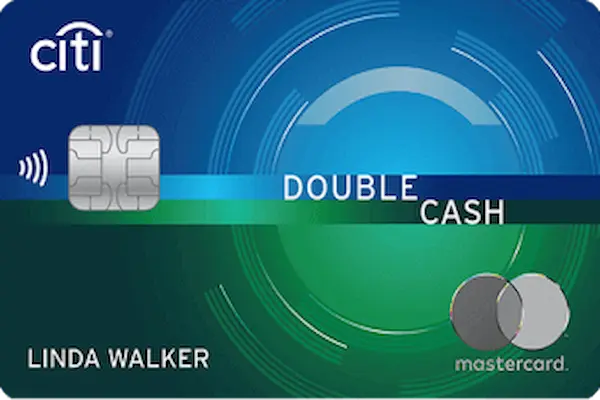
Quick facts (scannable summary)
Key fees (annual fee, authorized users, foreign transaction fee)
Annual fee: $0.
Foreign transaction fee: 3% of each purchase.
Balance transfer fees may apply, and can vary depending on the current offer terms.
Late and returned payment fees can apply, and exact amounts can vary by agreement and timing.
Reward structure (earning, caps, redemption basics)
You earn 1% when you buy, plus an additional 1% as you pay.
Cash back is earned in the form of ThankYou® Points.
Those points can typically be redeemed for cash back options such as statement credit, direct deposit, or check.
Redemption value can vary depending on the method you choose.
There is no stated cap in the base structure on how much cash back you can earn.
Some versions of the offer may highlight enhanced earnings on select travel booked through an issuer portal.
Core benefits (top 5 bullets)
- No annual fee.
- Flat-style earning: 1% when you buy and 1% as you pay.
- Cash back redemption options such as statement credit, direct deposit, or check.
- Security features such as $0 liability on unauthorized charges and fraud monitoring are commonly highlighted.
- Access to Citi Entertainment® is commonly listed as a card benefit.
Eligibility and approval: what typically matters
Credit profile expectations (general, no promises)
Lenders usually look at your credit history.
They often consider your recent inquiries.
They also review how consistently you pay on time.
They look at your utilization, which is how much of your available credit you are using month to month.
They consider your broader affordability picture, including debt relative to income.
None of that guarantees an outcome, but it explains why two people can apply for the same card and get different results.
Income/spend patterns that may help (general guidance)
Applications typically ask for income information.
Lenders generally use that information to assess affordability.
Stable income and a history of responsible payment behavior typically help in underwriting across the industry.
It can also help when your existing credit lines show on-time payments and balances that are not consistently near the maximum.
Invitation / application flow (if the card is invite-only)
The Citi® Double Cash Card is not positioned as invite-only.
In practice, that usually means you apply directly.
You may receive an instant decision or next steps.
You might also be asked to complete identity or income verification.
Fees and costs you must understand first
Annual fee breakdown and what’s included
The annual fee is $0.
That means you are not paying a yearly charge just to hold the card.
This can be a meaningful difference versus premium cards where the “math” depends on whether you will use credits and perks.
Authorized user costs and family/business add-ons
Authorized user policies can vary and can change.
If authorized users matter for your household, confirm the current terms in the official pricing and agreement before you apply.
Late fees, APR/Pay Over Time, other charges
Purchase APR is typically variable and depends on creditworthiness.
Your actual rate can differ from someone else’s.
Some offers include a 0% intro APR for balance transfers for a set number of months.
Interest can apply once that period ends.
Balance transfers usually come with a fee.
A foreign transaction fee can make this card less attractive for international travel or overseas online merchants, depending on your habits.
Fees vary, so always confirm in the official terms and your specific pricing disclosure.
Rewards: earning and redemption (the real math)
How you earn (categories, base rate, bonuses)
The core mechanic is a “double” structure.
You earn 1% when you buy.
You earn an additional 1% as you pay.
That means timing matters, because the second half is tied to payments on your purchase balance.
You typically need to make at least the minimum payment on time to earn the payment portion.
Certain transactions commonly do not earn rewards, such as balance transfers, cash advances, fees, interest, and returned items.
Some versions of the offer may promote additional earnings for select travel booked through an issuer portal.
Best redemption routes (travel partners, statement credit, portals)
If your goal is simplicity, cash back redemptions such as statement credit or direct deposit tend to feel the cleanest.
Gift cards and travel redemptions may be available too.
Value per point can vary depending on what you choose.
A practical approach is to decide what “one point” means to you in real dollars, and then stick to redemptions that match that goal.
Example: what $10,000 spend/year earns in points (simple scenarios)
Assume you spend $10,000 on regular purchases over a year.
At 1% when you buy, that is about $100 worth of rewards from purchases.
If you then pay that purchase balance as required to earn the additional portion, that can add about another $100.
In that simplified scenario, your total is about $200 back on $10,000 in spend, before considering exclusions or portal bonuses.
Benefits deep dive
Travel benefits (lounges, hotels, airline perks)
This is not marketed as a lounge-access or luxury travel status card.
The most travel-relevant angle is often extra earning on select travel booked in a portal.
If you travel frequently outside the U.S., a foreign transaction fee can be a real cost to factor in.
Lifestyle and experiences (dining, events, concierge)
Citi Entertainment® is promoted as a benefit and may matter if you like presales or special access experiences.
This card is not typically positioned as a concierge-tier product.
It is best to treat it as a rewards-first card, with lifestyle extras as a nice-to-have rather than the main reason to apply.
Credits (what counts, enrollment rules, use-it-or-lose-it)
The Citi® Double Cash Card is not centered around recurring statement credits.
That can be a relief if you dislike tracking monthly credits.
But it also means you should not expect premium-style credits that offset an annual fee.
Purchase protections (extended warranty, returns, purchase protection)
Purchase protections vary widely by card and can change.
Security and fraud protections are often emphasized.
If purchase protections matter to you, confirm the current benefits guide and cardmember agreement that applies to your specific account.
Travel protections (trip delay/cancel, baggage, rental car)
This card is not typically positioned as a travel insurance-focused option.
If you rely on trip delay or cancellation coverage, compare with cards that clearly list those protections as primary benefits.
Pros and cons (fast decision section)
Pros
- $0 annual fee keeps the baseline cost low.
- Simple earning that does not require category tracking.
- Can work well as a “catch-all” card in a multi-card setup.
- Cash back redemption paths like statement credit and direct deposit keep it straightforward.
- Security tools and fraud monitoring can add peace of mind.
Cons
- Foreign transaction fees can be a drawback for international usage.
- You only get the full “double” earning when you make payments as required, so the structure rewards good payment habits.
- If you want premium travel perks, this is usually not the right category.
- Balance transfer fees can be meaningful even when an intro APR is offered.
Who this card is best for (and who should skip)
Best-fit profiles (3 profiles)
Profile 1: The “one-card minimalist” who wants a flat rewards rate without category homework.
Profile 2: The “two-card optimizer” who uses another card for a single high-bonus category and wants Double Cash as the everything-else option.
Profile 3: The “cash-back first” person who prefers statement credits or deposits over complex travel redemptions.
Not a fit if… (3 profiles)
Not a fit 1: You spend a lot abroad or with international merchants and want no foreign transaction fee.
Not a fit 2: You want lounge access, elite hotel status, or premium travel protections as core features.
Not a fit 3: You prefer cards where you earn the full rewards immediately at purchase, without a second “as you pay” step.
Head-to-head comparisons (SEO powerhouse)
Citi® Double Cash Card vs Wells Fargo Active Cash
Both are commonly discussed as simple flat-rate cash back cards.
A practical differentiator is the reward mechanism.
Double Cash splits earning into “buy” and “pay.”
Some competitors advertise a single flat earn at purchase.
If you pay in full and on time anyway, that difference may feel minimal day to day.
But it is still worth understanding.
Citi® Double Cash Card vs Chase Freedom Unlimited
Some competitors are positioned with a mix of base earning and elevated rates in specific categories.
Some also focus on a points ecosystem that can be used for travel.
Double Cash appeals to people who want simplicity and fewer moving parts.
If you already live inside a points ecosystem and actively redeem for travel, that may influence your preference.
What you give up / gain at each price tier
At the $0 annual fee tier, the main goal is consistent rewards and low friction.
As you move into annual-fee cards, you are often paying for travel protections, credits, and premium experiences.
If you will not use those perks, a no-annual-fee structure can be easier to justify year after year.
How to apply (step-by-step)
Application/invitation steps
Step 1: Review the current offer details, including intro APR periods, balance transfer fees, and key terms.
Step 2: Complete the application with accurate identity and income information.
Step 3: If requested, provide verification documents or follow identity confirmation steps.
Step 4: After approval, set up your online account access and payment method.
Step 5: Consider autopay to help you consistently meet payment requirements that can affect how rewards are earned.
What to prepare (income, docs, business info if relevant)
Have your personal identifying details ready, such as address history.
Have basic employment or income information ready.
If you plan to use the card for balance transfers, prepare the account details you might transfer from.
What happens after approval (delivery, setup, enrollment in perks)
After approval, you typically receive the card and activate it.
You can set up digital wallet usage if you prefer mobile payments.
You can review the security and benefits tools available in your account.
Then you can set a payment routine that matches the way rewards are earned.
Alternatives if you want similar value for less
Best simple cash-back alternative
If your top priority is “flat cash back with minimal thinking,” compare other flat-rate cards and focus on differences like foreign transaction fees, protections, and redemption convenience.
Best points-earning alternative
If you want flexibility to redeem for travel, you may prefer a card whose rewards are designed around a points ecosystem you already use.
FAQs
Is it worth it?
It can be worth considering if you want a no-annual-fee card with a straightforward earning structure and you consistently make payments that qualify you for the full rewards.
Can I request an invite?
This product is not generally described as invite-only, so most people apply directly.
Do benefits change by region?
Terms and promotional offers can vary over time.
The safest approach is to review the current official pricing and disclosures for your application.
Does it have a preset spending limit?
It is a credit card, so it typically has a stated credit limit rather than a charge-card-style preset spending limit.
Does it charge foreign transaction fees?
A foreign transaction fee is typically disclosed for this card, and you should confirm the current rate in the official terms.
Do balance transfers earn cash back?
Balance transfers are commonly excluded from earning rewards on many cards, and you should confirm the current exclusions in the official terms.
Do rewards expire?
Rewards policies depend on program terms and account status.
Confirm the current rewards program rules and your cardmember materials.
How do I redeem points for cash back?
Cash back redemption options commonly include statement credit, direct deposit, or check.
Exact redemption steps can vary by account setup.
Disclosures
Rates/fees disclaimer
Rates, fees, and promotional offers can change.
Your APR and terms depend on creditworthiness and the specific offer you apply under.
Always read the official pricing details, card agreement, and program terms before applying.
Editorial + affiliate disclosure
This article is for informational purposes only.
We are not Citi.
We do not represent Citi.
We are not affiliated with Citi or Mastercard.
Any product names are used for identification, and eligibility decisions are made by the issuer.


