Supplemental Security Income: Apply, Appeals & Help
If you are living with a disability, blindness, or age-related limits, money stress can feel constant.
And when your health already takes energy, paperwork can feel like a second job.
Supplemental Security Income can help create stability when income and resources are limited.
See eligibility, applying, checking status, appeals, and how to choose legal help safely.
Supplemental Security Income: how to apply and who may qualify
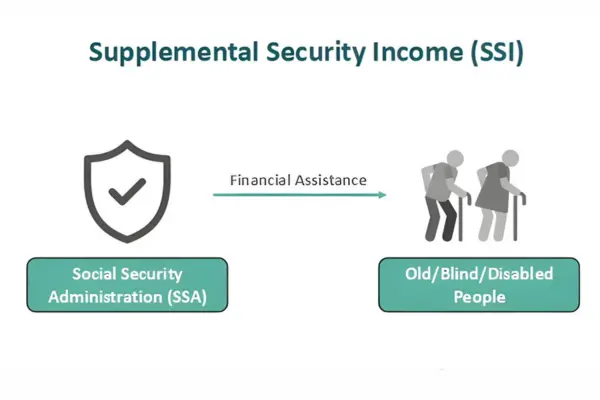
Supplemental Security Income, often called SSI, is a needs-based program administered by the Social Security Administration.
SSI pays monthly benefits to people with limited income and limited resources who are age 65 or older, blind, or disabled.
Children who are blind or have qualifying disabilities may also qualify.
Basic eligibility categories in plain English
SSI eligibility starts with one of three categories.
You must be age 65 or older, blind, or meet Social Security’s rules for disability.
Then Social Security checks your income and resources, plus additional non-medical requirements.
| What Social Security looks at | What it means | Why it matters |
|---|---|---|
| Category | Age 65+, blind, or disabled | You must fit at least one SSI category |
| Income | Limited countable income | Income affects eligibility and monthly payment |
| Resources | Limited countable resources | Resources must be under SSI limits |
| Other rules | Residency, absence rules, institutional status, and more | These can affect whether SSI is payable |
Because SSI is needs-based, the financial rules matter just as much as the medical rules.
That is why a strong application is both medical and financial, not just one or the other.
Step-by-step: how to apply for Supplemental Security Income
- Start with Social Security’s official SSI application pathways.You may be able to start online, or you can call Social Security to set a phone appointment to apply.
The main Social Security phone number is 1-800-772-1213, and TTY is 1-800-325-0778.
- Choose the right application type.Social Security provides separate starting points for an adult application and a child application.
If you are applying due to disability, you may also complete disability-related forms as part of the process.
- Be consistent about household details.SSI decisions depend on who lives with you, your living arrangement, and how bills are paid.
Small inconsistencies can trigger delays or follow-up requests.
- Submit what you have, then respond fast.If Social Security requests additional documents, reply quickly and keep copies.
Fast follow-up often matters more than “perfect” paperwork on day one.
What to gather before you apply
You do not need to show up with a binder to start.
But having the basics ready can reduce delays and prevent repeat calls.
- Identity and contact information.Keep your mailing address, phone, and any prior claim information accurate.
If your address changes, update it quickly so you do not miss deadlines.
- Financial records.SSI reviews income and resources, so gather recent bank information and income proof you have available.
If you receive other benefits, keep letters or award notices if you have them.
- Medical and disability details.Write down diagnoses, medications, treatment providers, and recent hospital or clinic visits.
If you can list dates and provider contact details, it becomes easier for the agency to request records.
- A daily life snapshot.SSI disability decisions look at function, not just diagnosis.
Make notes about what you struggle with, what help you need, and what triggers symptom flare-ups.
Supplemental Security Income payments: what you can expect in 2026
SSI has a federal maximum monthly payment amount, and it can change each year with cost-of-living adjustments.
For 2026, Social Security lists the maximum federal SSI amounts as $994 for an eligible individual and $1,491 for an eligible individual with an eligible spouse.
Social Security also lists $498 for an essential person in 2026.
Your actual payment can be lower than the federal maximum.
Income rules, living arrangements, and other factors can reduce the payable amount.
Some states also provide a state supplement that can increase what you receive, depending on where you live.
When SSI is paid each month
SSI is generally paid on the 1st of each month.
If the 1st falls on a weekend or federal holiday, Social Security pays SSI on the prior business day.
If you receive both Social Security benefits and SSI, or if you received Social Security before May 1997, Social Security uses a different schedule for some payments.
When timing matters, use the official Social Security payment calendar for the most accurate dates.
SSI financial rules: income, resources, and why people get reduced
SSI is built around “countable” income and “countable” resources.
The more countable income you have, the lower your SSI payment can be.
If your countable income is over the allowable level, you may not be eligible for SSI.
SSI resources and the resource limit
Social Security lists the SSI countable resource limit as $2,000 for an individual and $3,000 for a couple.
Not everything you own counts, but the resource limit is still a major eligibility point.
That is why planning and reporting are important, especially at the end of each month.
How SSI counts income, without the math headache
Social Security uses exclusions, which means some income is not counted.
For earned income, Social Security generally excludes the first $65 per month plus any unused portion of the $20 unearned income exclusion, and then counts one-half of the remainder.
These rules can get detailed, but the big takeaway is that working does not always reduce SSI dollar-for-dollar.
| Financial factor | What it affects | Why you should care |
|---|---|---|
| Countable income | Eligibility and payment amount | More countable income usually means less SSI |
| Earned income exclusions | How work affects SSI | Some earnings are excluded under SSI rules |
| Countable resources | Eligibility | Must stay under SSI resource limits |
| Living arrangement support | Payment amount | Help with shelter can reduce SSI |
Living arrangements and in-kind support
SSI payments can be reduced when Social Security counts certain support as income.
Social Security calls this in-kind support and maintenance, meaning food, shelter, or both that someone else provides.
Social Security counts in-kind support and maintenance as income when calculating SSI, and help with shelter costs can reduce SSI.
If a family member helps with rent, mortgage, or utilities, you should ask how to report it correctly.
Correct reporting protects you from overpayment notices later.
SSI disability basics: what “disabled” means for adults
For adults, Social Security generally defines disability as the inability to engage in substantial gainful activity due to a medically determinable physical or mental impairment.
The impairment must be expected to result in death or last, or be expected to last, at least 12 continuous months.
This is why medical evidence, timelines, and functional limits matter so much.
Social Security also publishes annual substantial gainful activity amounts.
Instead of guessing a dollar number, use Social Security’s official SGA page when you want current thresholds.
How to build strong medical evidence for SSI
A strong disability claim connects three things.
It shows the diagnosis.
It shows the treatment history.
And it shows how symptoms limit your ability to function day to day.
- List all providers with contact information.If Social Security can request records easily, your claim often moves smoother.
- Track symptoms as limitations, not labels.Instead of “I have anxiety,” describe what happens, how often, and what you cannot do because of it.
- Be specific about daily activities.Explain what support you need with cooking, bathing, chores, transportation, memory, or focus.
Specific examples are easier to evaluate than general statements.
- Complete forms carefully.Social Security uses forms like the Adult Disability Report to understand your condition and work history.
If you need help, ask for it, but keep answers consistent with your medical records.
How to check your SSI claim: application status and next steps
Waiting without information is exhausting.
The good news is Social Security provides official ways to check application or appeal status through your online account.
In many cases, a personal my Social Security account is the fastest place to see updates.
Step-by-step: check SSI application status
- Sign in to your personal my Social Security account.If you do not have one, create an account using Social Security’s official pathway.
- Use the “check application or appeal status” feature.Look for messages that request documents or schedule steps.
- Save what you see.Screenshot the status page and any requests so you can track dates and deadlines.
- If you do not have online access, call Social Security or your local office.Ask what stage the claim is in and whether anything is missing.
If your status looks “stuck,” the most common cause is missing information.
Ask whether documents were received and accepted, because those are not always the same thing.
SSI appeals: how to fight a denial without losing your deadline
Denials happen, and they are not always the final word.
Social Security allows you to appeal many SSI determinations and decisions.
You generally must request an appeal within 60 days of receiving the notice.
The four levels of appeal
Social Security describes a structured appeals path.
You may not have to go through every level, but these are the main steps.
- Reconsideration.This is usually the first appeal step after an initial determination.
- Hearing with an administrative law judge.If you disagree with reconsideration, you can request a hearing.
- Appeals Council review.If you disagree with the hearing decision, you can ask the Appeals Council to review.
- Federal court.If you disagree after the Appeals Council, you may file in federal district court.
Practical appeal tips that help real people
- Do not miss the 60-day deadline.File the appeal, even if you are still gathering evidence.
- Focus on what changed or what was missing.Strong appeals often add medical evidence, clarify limitations, or correct misunderstandings.
- Keep a clean timeline.Write a simple list of dates, diagnoses, hospitalizations, and treatment changes.
A clear timeline makes your story easier to evaluate.
- Ask about continued benefits when relevant.Some notices explain whether you can keep receiving benefits during an appeal in certain situations.
Legal help: best ssi lawyers near me and how to choose safely
Many people search “best ssi lawyers near me” after a denial, or when the process feels too complex.
Others search “ssi attorney near me,” “social security attorney near me,” or “social security disability lawyers near me” because they want an expert to handle deadlines and evidence.
That instinct makes sense, especially when your health already takes so much of your bandwidth.
Social Security allows you to appoint a representative.
That representative can be an attorney or a qualified non-attorney.
If you appoint someone, Social Security requires you to tell them in writing, often using Form SSA-1696.
When a social security appeal lawyer can be especially helpful
- You received a denial and need to appeal quickly.Deadlines are strict, and a missed deadline can cost months.
- Your medical history is complex.Multiple conditions, hospitalizations, or mental health records can require careful organization.
- Your case is headed to a hearing.Hearings are more formal, and representation can help with preparation and evidence framing.
- You are overwhelmed and need someone to take over communication.A representative can help manage forms, requests, and follow-ups.
How fees usually work for SSI representation
Most disability representatives work on contingency.
That means they generally only get paid if you win past-due benefits, and the fee must be approved by Social Security.
Under Social Security’s fee agreement process, the fee cannot exceed the lesser of 25% of past-due benefits or a specified dollar cap, which Social Security lists as $9,200 on its fee agreement guidance.
Ask any representative to explain fees in writing.
Also ask about costs, because expenses such as medical record fees can be separate from attorney fees.
Questions to ask a medical and disability representative
If you are also searching for a “medical insurance broker” or “medical insurance agents near me,” pause and separate the issues.
SSI representation is about a Social Security claim, not shopping for private insurance.
So you want a representative who focuses on Social Security disability and SSI work, not a general insurance salesperson.
- How many SSI cases like mine have you handled recently.Ask about cases involving your condition type and your appeal level.
- Who will actually work on my case.Some firms use teams, so clarify whether you will speak to an attorney or a staff member most often.
- What is your plan for evidence.A good answer mentions medical records, functional statements, and deadlines.
- How will you keep me updated.Communication style matters when anxiety and deadlines collide.
- What is the fee agreement.Ask for the exact terms and confirm Social Security must approve it.
Avoid scams when searching for legal help
Be careful with ads that promise “guaranteed approval.”
No one can ethically guarantee an SSI outcome.
If someone demands large upfront payments just to “submit” a claim, treat that as a red flag and verify everything through official Social Security resources.
Faster decisions: presumptive disability and fast-track options
Some people qualify for faster support while Social Security completes a final decision.
For SSI disability or blindness claims, Social Security may pay presumptive disability or presumptive blindness payments for up to six months while the state Disability Determination Services reviews the case.
Presumptive decisions are based on severity and available evidence, and they are meant for situations with a high likelihood of approval.
Social Security also has fast-track processes for certain severe conditions.
The Compassionate Allowances program identifies conditions that clearly meet Social Security’s disability standards, helping speed decisions.
Social Security also describes technology-based fast-track approaches such as Quick Disability Determinations.
How to raise an expedited issue the right way
- Ask whether presumptive disability applies.If it might, ask what evidence they need right now.
- If you have a condition on the Compassionate Allowances list, mention it.Ask whether your claim can be flagged accordingly.
- If your situation is urgent, be specific.Bring documentation like eviction notices, shutoff notices, or medical statements when relevant.
Common mistakes that cause SSI delays or overpayments
Most SSI problems are not about “doing something wrong.”
They are about missing a detail that the system treats as critical.
If you know the pressure points, you can avoid many of the common setbacks.
- Not reporting changes.Income, address, living arrangement, and household changes can affect SSI and must be reported properly.
- Confusion about support from family.Help with shelter can be counted as in-kind support and maintenance and can reduce payments if not reported correctly.
- Missing mail.Many deadlines are communicated by letter, and missing a notice can stop momentum fast.
- Waiting too long to appeal.The 60-day appeal clock is real, and waiting for “more proof” can backfire.
File first, then build evidence.
Important disclaimer
This content is independent and has no affiliation, sponsorship, or control over the Social Security Administration or any attorney, law firm, platform, or third party mentioned.
For official guidance and case-specific decisions, use verified Social Security resources or your local Social Security office.
Next steps: choose the simplest action you can do today
You do not need to solve everything in one sitting.
You just need one clear next step that moves your claim forward.
- If you have not applied, start your Supplemental Security Income application through Social Security’s official SSI application pathways.Call to schedule a phone appointment if you cannot start online.
- If you already applied, check your SSI application status through your my Social Security account or the official status page.Then respond to any document request immediately.
- If you were denied, file your appeal before the deadline.If you are searching for a social security appeal lawyer, verify fees and experience, and appoint representation properly.
- If your situation is urgent, ask about presumptive disability or fast-track options.Bring evidence that shows why your case should be treated as time-sensitive.